

I am a theoretical physicist working to explain how natural ecosystems stabilize an environment and climate favorable for life. The ethical and practical implication of this work is that we must preserve natural ecosystems if we want our civilization to persist, while transforming into something more meaningful than it is now. This motivates much of what I do.
Besides theoretical studies, my colleagues and I are eager to participate in practical work that can lead to nature conservation based on biotic regulation principles. This is what I want to describe in this post.
BIOM
Our colleagues and friends at BIOM in Bishkek are doing precisely that. They are strong supporters of biotic regulation and, together with the Ministry of Natural Resources and UN programs in the country, use their expert knowledge to develop strategies for nature conservation in Kyrgyzstan and beyond.
Their work formed part of the basis for the UN General Assembly resolution “Nature knows no borders: transboundary cooperation – a key factor for biodiversity conservation, restoration and sustainable use,” initiated by Kyrgyzstan and adopted in 2021. Of the international conservation documents I have encountered, this one comes remarkably close to the language of biotic regulation.
Paragraph 9, in particular, encourages countries
“to maintain and enhance connectivity of habitats, … thereby contributing to the maintenance of their functioning.”
Here the word ‘functioning’ is important. From the biotic regulation perspective, a natural ecosystem is not simply a collection of species that we should preserve because they are beautiful, rare, or valuable to us. A natural ecosystem has a function: through the coordinated activity of living organisms that constitute ecological community, it creates and maintains an environment favorable for life.
The UN resolution does not say this explicitly. We are still a long way from explicit biotic regulation language. But every long journey must have a beginning.
And, as we discovered during our travels in Kyrgyzstan, the seemingly simple idea of preserving functioning ecosystems immediately raises a difficult practical question:
What, exactly, should we preserve?
As global resources dwindle, we humans try to extract more intensely from what remains in order to sustain the living standards of an ever-growing and aspiring population. In Kyrgyzstan, a major manifestation of this pressure is grazing. Livestock are an important part of the economy and of rural life, but increasing grazing pressure leaves little space for natural ecosystems.
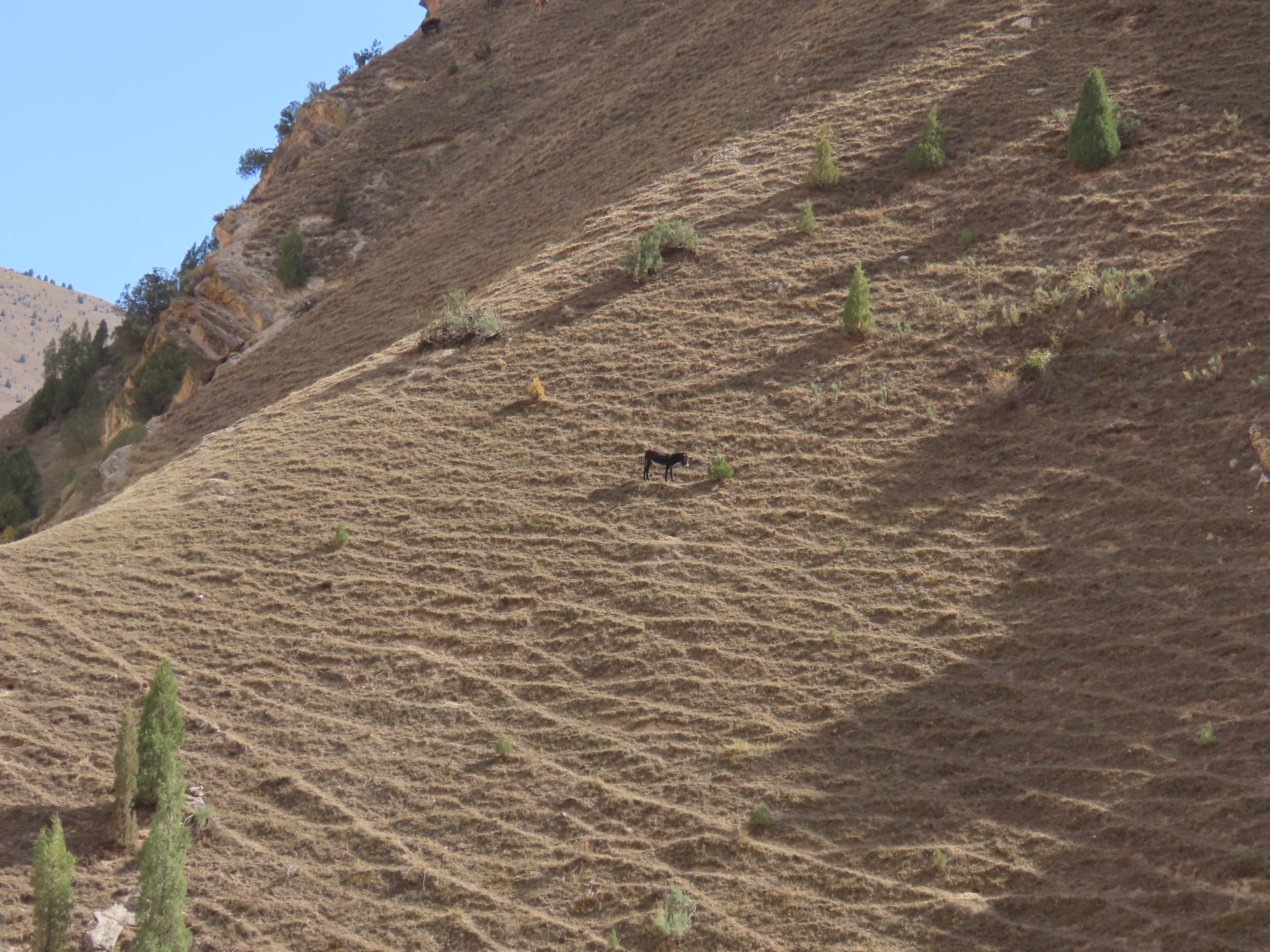
These curved paths on the slope are made by cows, goats, horses and donkeys, all of whom eat away all the green life they can chew. This makes ecological succession and the restoration of ecosystems impossible.
Yet there is also a strong core of people in the country who share the principles of biotic regulation and firmly believe that functioning natural ecosystems must somehow be carried through the bottleneck of our present predicament.
I want to share some impressions from a trip in which we have been taking part. Its purpose is to identify places that could subsequently receive protection within Kyrgyzstan’s concept of an Ecological Framework (Экологический каркас), which is being developed as a foundation of the country’s biodiversity conservation strategy.
This is conservation at a very concrete level. You drive through the landscape. You look. You stop. You ask: What is still here? What has survived? And what has a chance of recovering if the pressure is removed?
Our journey started from Osh, an ancient city at the edge of the Fergana Valley, which celebrated its 3,000th anniversary in 2000. Along the way, there were reminders that pressure on nature is part of a broader transformation of the country.
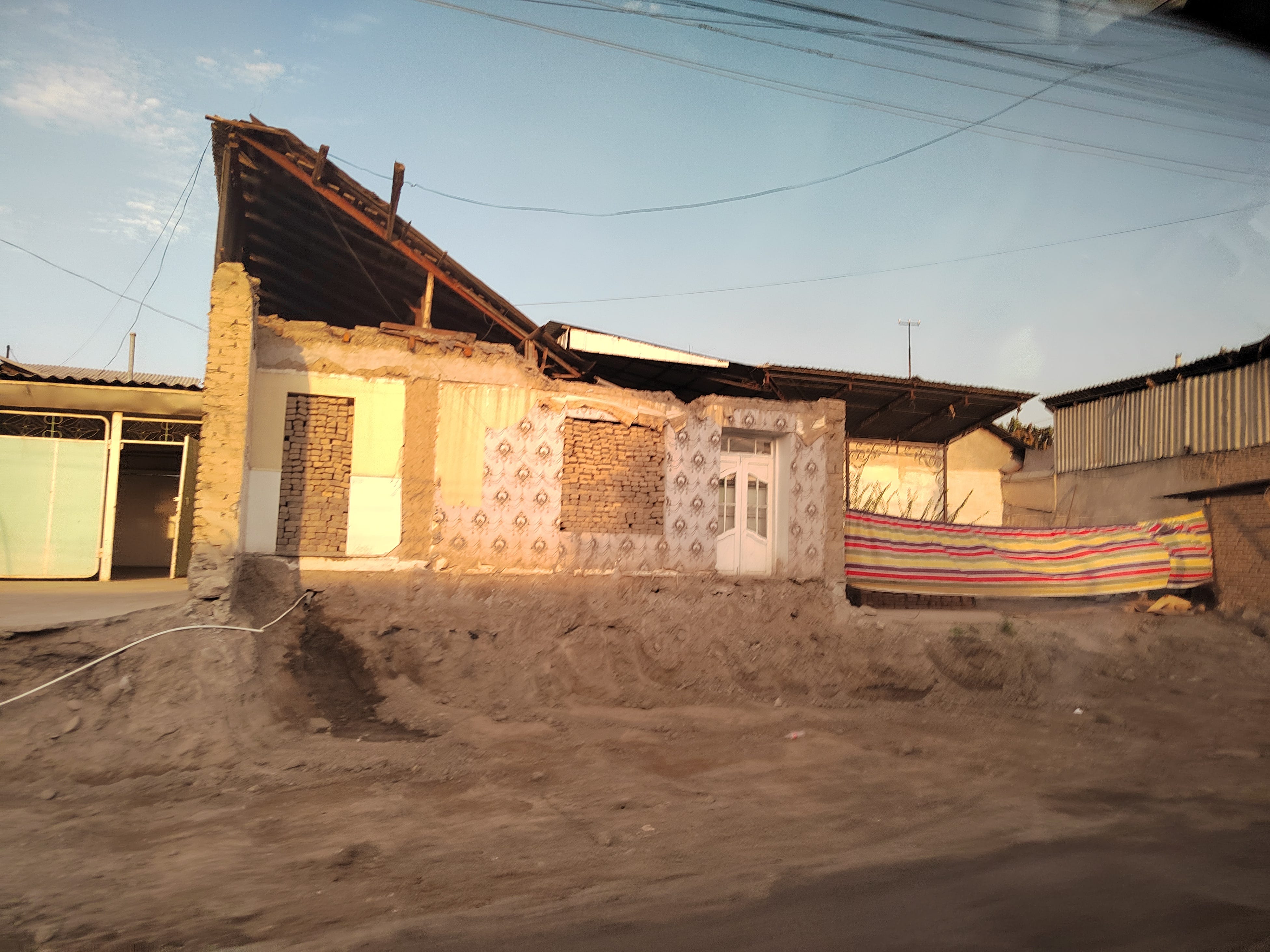
Much of Kyrgyzstan is now in a state of road construction with strong Chinese participation, with major roads being widened as the country becomes increasingly connected to the outside world. Sometimes this expansion goes directly through people’s homes. This photograph shows the wallpaper of a room in a house in Osh that was literally cut in half to make space for the widening road. When I think that my own life is becoming difficult, I now remember the people who were left with half a house.
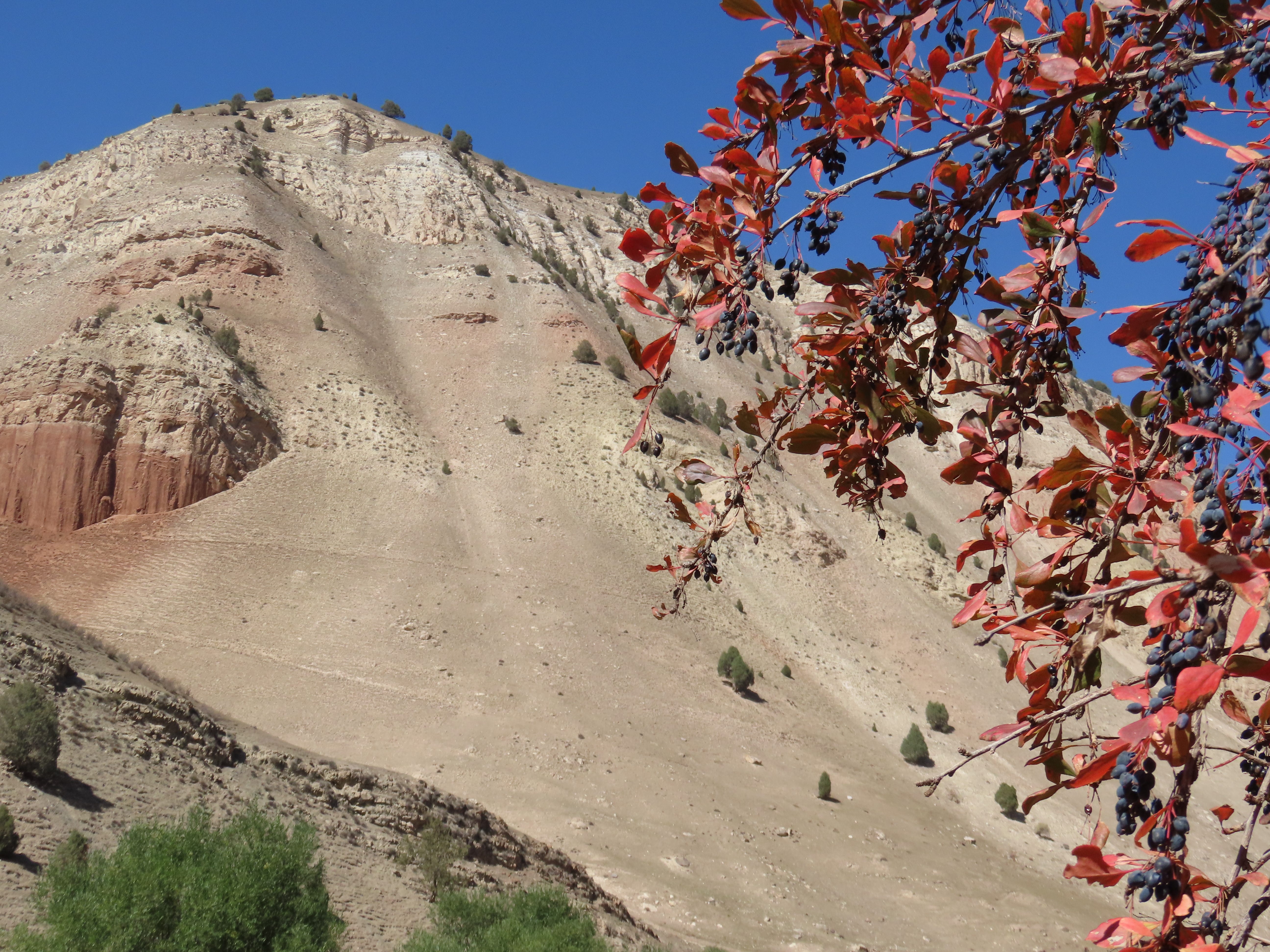
The journey took us through hills that, in autumn, looked particularly barren. At first, there seemed to be little that could qualify as a core area for conservation.
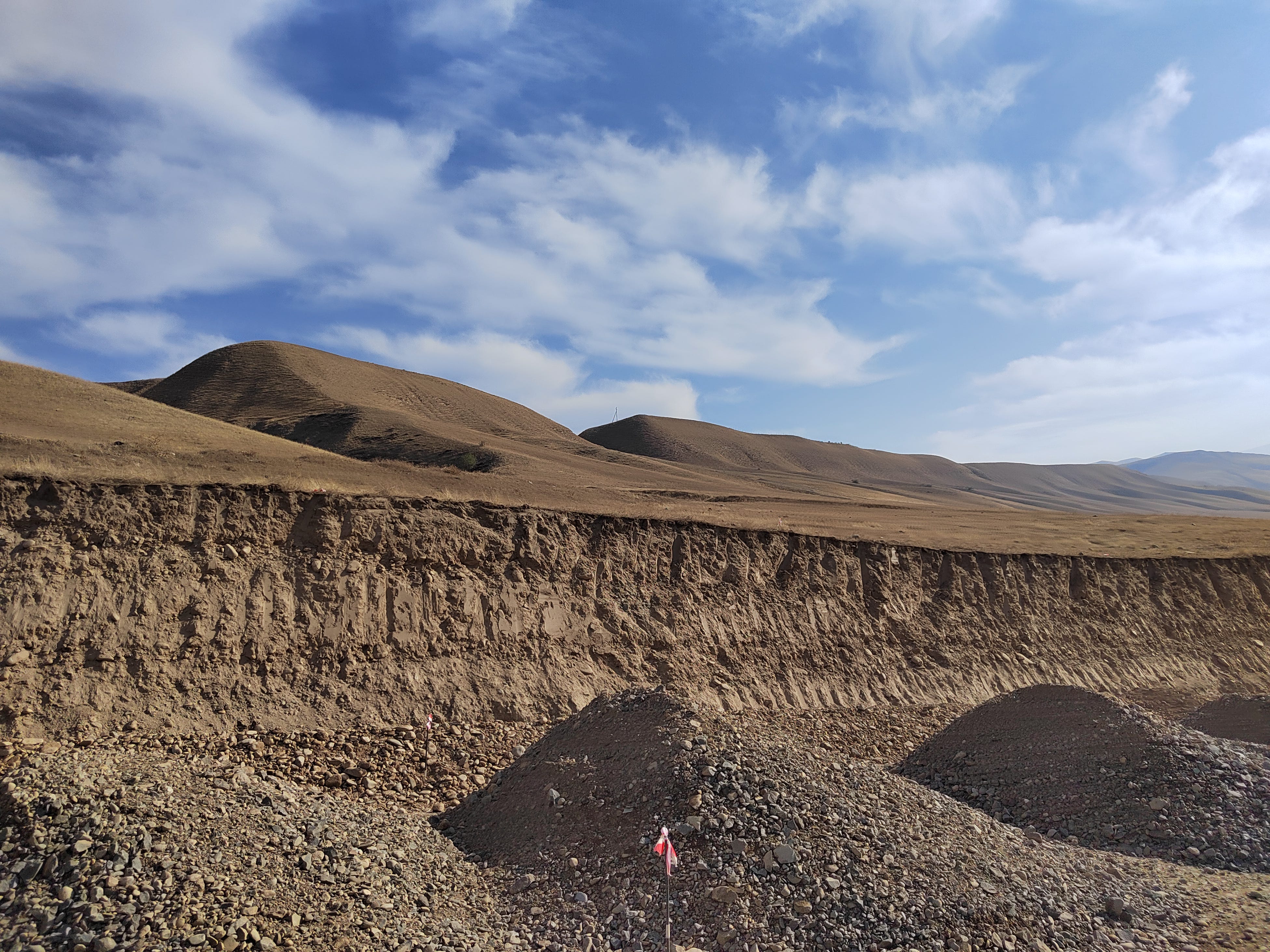
Yet here and there, a solitary tree could be seen surviving among the heavily grazed slopes.
To me, these rare trees looked like footprints from another landscape. They showed that the present barrenness does not necessarily tell us what this land is capable of supporting. If grazing pressure were reduced, some capacity for tree and shrub cover might still remain.
As we drove higher into the mountains, the landscape began to change. The slopes became steeper, and deep canyons appeared. Here, something very simple had protected nature: grazing became physically difficult or impossible. In these inaccessible patches, nature had survived.
There were shrubs. Trees. Birds. Small pockets of vegetation that contrasted sharply with the surrounding grazed slopes.
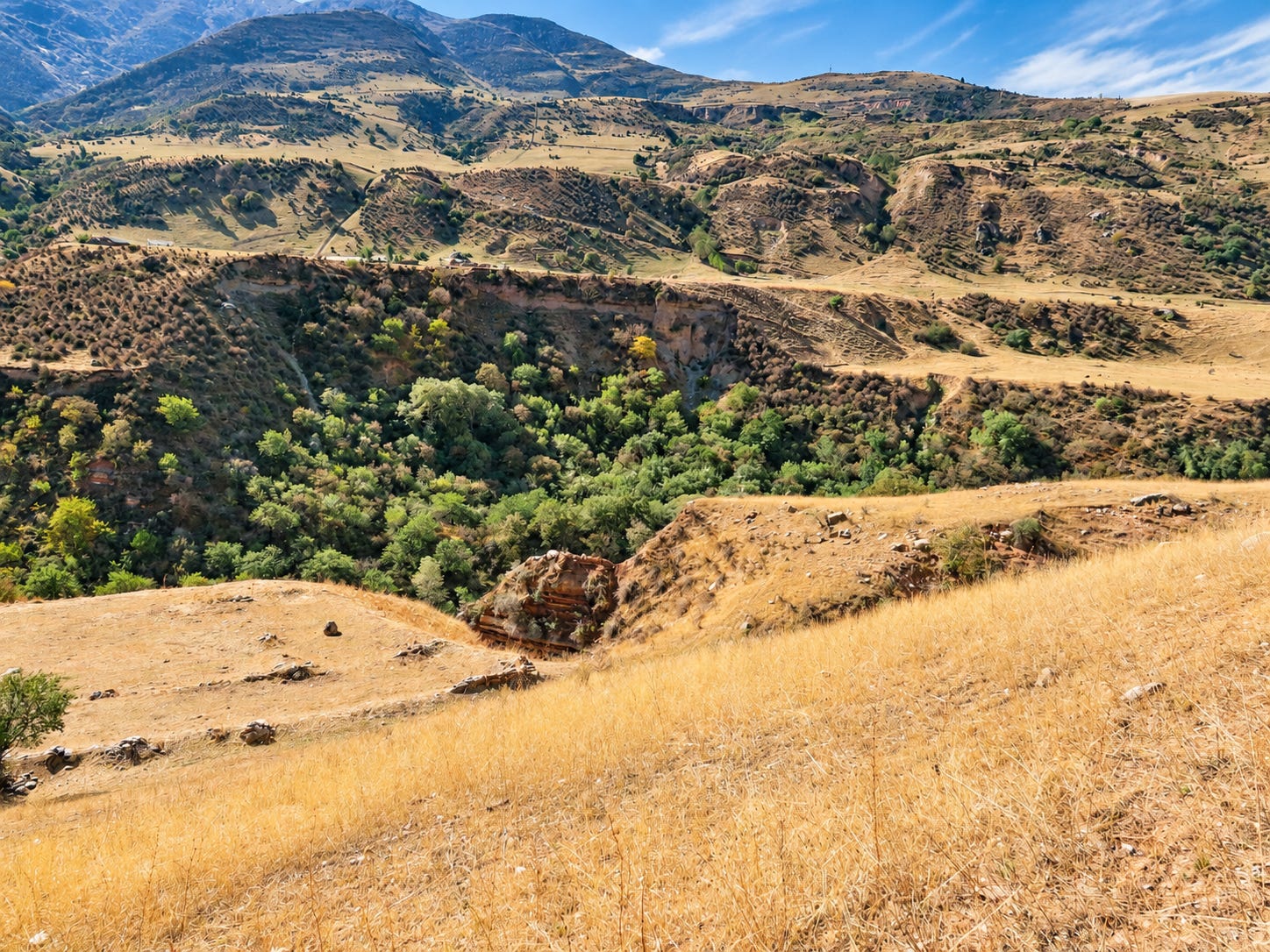
Pockets of vegetation from which the recovery could start
Our team included BIOM members and a botanist and ornithologist from the National Academy of Sciences. Once we encountered such a place, we stopped, recorded its coordinates and wrote down a brief ecological description. These surviving fragments could become elements of the ecological framework: small cores from which a more connected natural landscape might eventually be protected.
One of our particular goals was to find Knorring’s hawthorn (Crataegus knorringiana), a rare species included in the Red Book of Kyrgyzstan. Finding such a species matters not only botanically. Red Book species receive special legal protection, and their presence can provide a basis for establishing a small protected area, a micro-reserve.
Micro-reserves
Micro-reserves are a conservation tool now being developed in a distinctly Kyrgyz way. They are small protected areas that can be created locally, without establishing a large national park or nature reserve. Kyrgyz law now allows local communities and authorities to set aside such places to protect species and ecosystems, creating many small spots where nature can survive and recover.
A small patch with a rare species, a surviving fragment of natural vegetation, or simply a place where recovery is still possible can be protected from grazing, cutting or other pressures. Such patches can be instrumental in preserving natural processes through which ecosystems restore themselves, including the maintenance of habitats where small animals such as insects can reproduce, and of plant seed banks.
One recent example is the Kyzyl-Suu micro-reserve near Issyk-Kul. It is only about ten hectares and has only just started. Grazing and mowing are excluded there so that the native vegetation can recover and produce seeds. Wild licorice, which has also suffered from harvesting, is among the plants receiving protection.
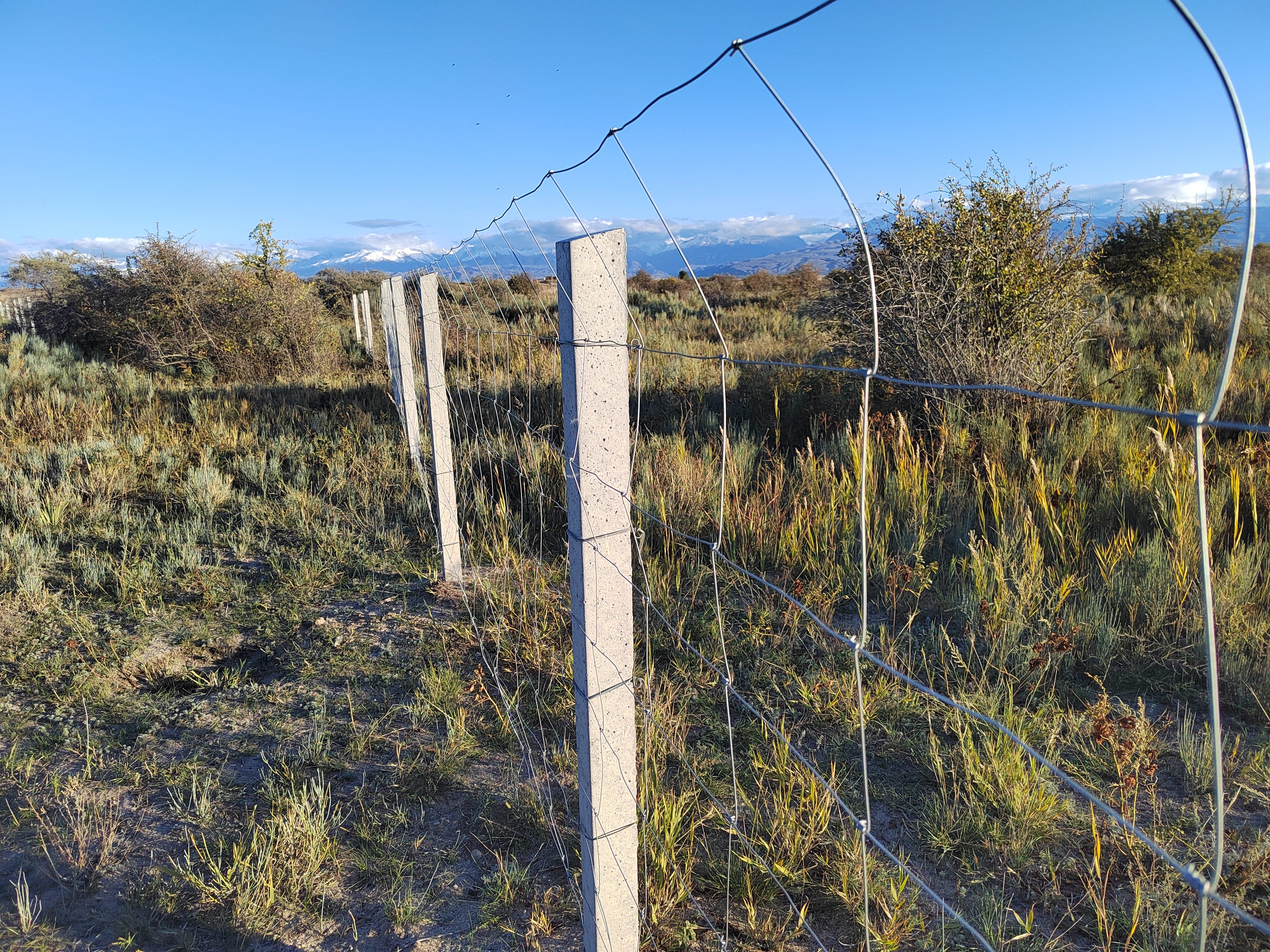
Kyzyl-Suu micro-reserve in 2024. The protected area is on the right, the heavily grazed area on the left.
Kyzyl-Suu is still at the beginning, so nobody yet knows what the place will look like after several years. But during our trip from Osh, a few hundred kilometers south of Kyzyl-Suu, we found a similar place where we could see what the expected result of such an experiment might look like.
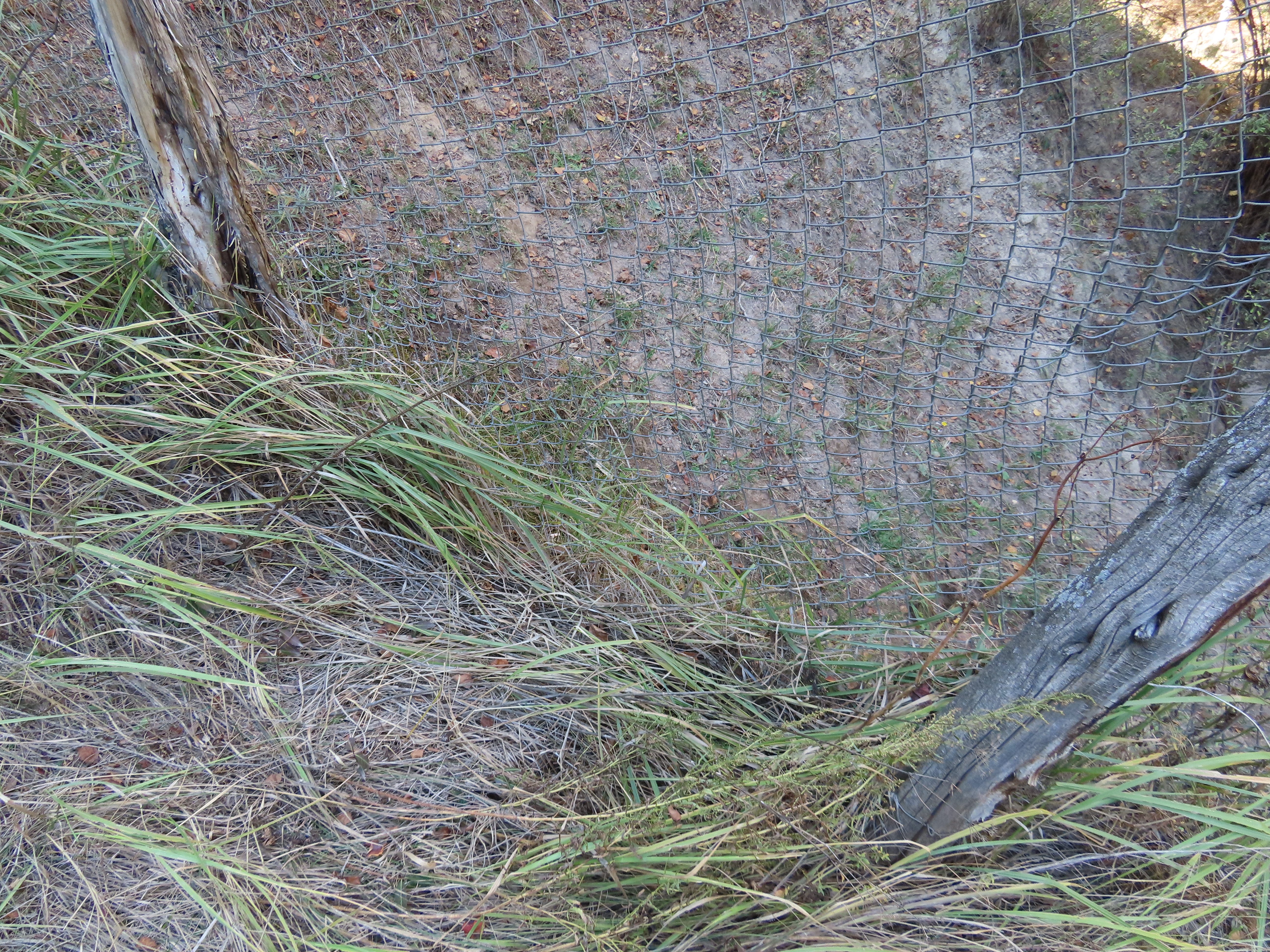
It was near an ancient sacred place, a mazar: a cave in the mountain with water dripping inside. The place hosted religious activity in ancient times and, more recently, was fenced off from grazing.
The image shows that the mountain slope protected from grazing has developed a strong grass cover, with virtually no bare ground left. It is therefore much better protected from erosion. On the grazed slope, in contrast, much of the soil remains exposed and can be washed away by rain. This example shows the potential for ecosystem self-recovery where the living system is still there and is simply given a chance to recover.
Celebrating the Remaining Life
We arrived in Kyrgyzstan from the still largely untamed Siberian wilderness, where nature rules. So traveling through a countryside devastated by overgrazing, searching for spots that were still alive, was very sad, even though we tried to hide our emotions from our hosts.
Our Kyrgyz colleagues and friends were exceptionally warm and good to us, and despite all the difficulties, they celebrated and rejoiced in every sign of self-sustaining life that we encountered along the way. They collected seeds, made a herbarium, and took sprouts to plant at their dacha, which two of them are planning to turn into a micro-reserve. It already supports a Red Book damselfly, hedgehogs, and a colony of bats rescued from a multi-storey building in the country’s capital.
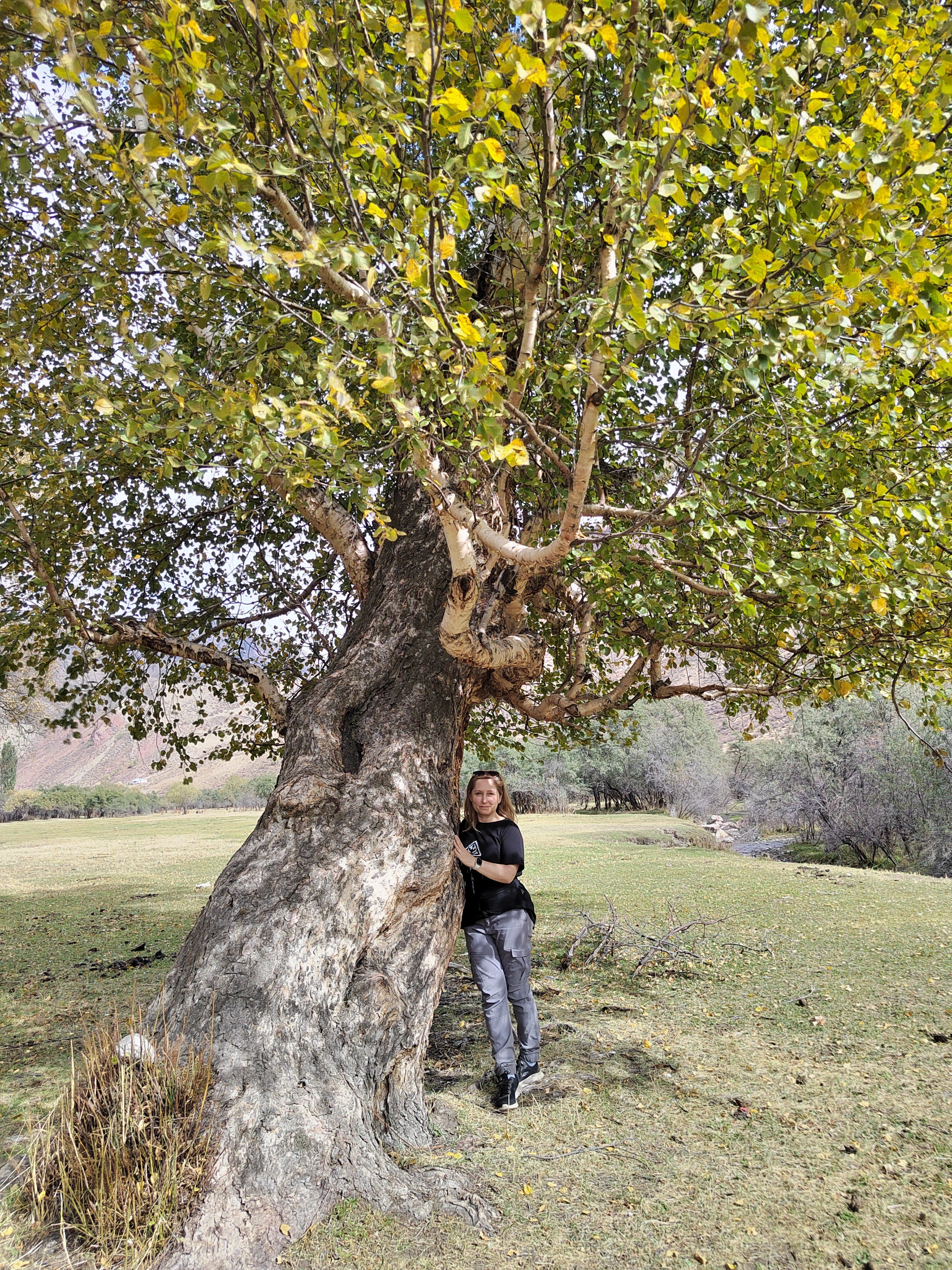
Anna Kirilenko, Executive Director of the Ecological Movement BIOM, under an old birch. To the right, one can see a riparian area, with small trees growing around a stream, that is also a candidate for preservation. Note the degree of overgrazing under the tree.
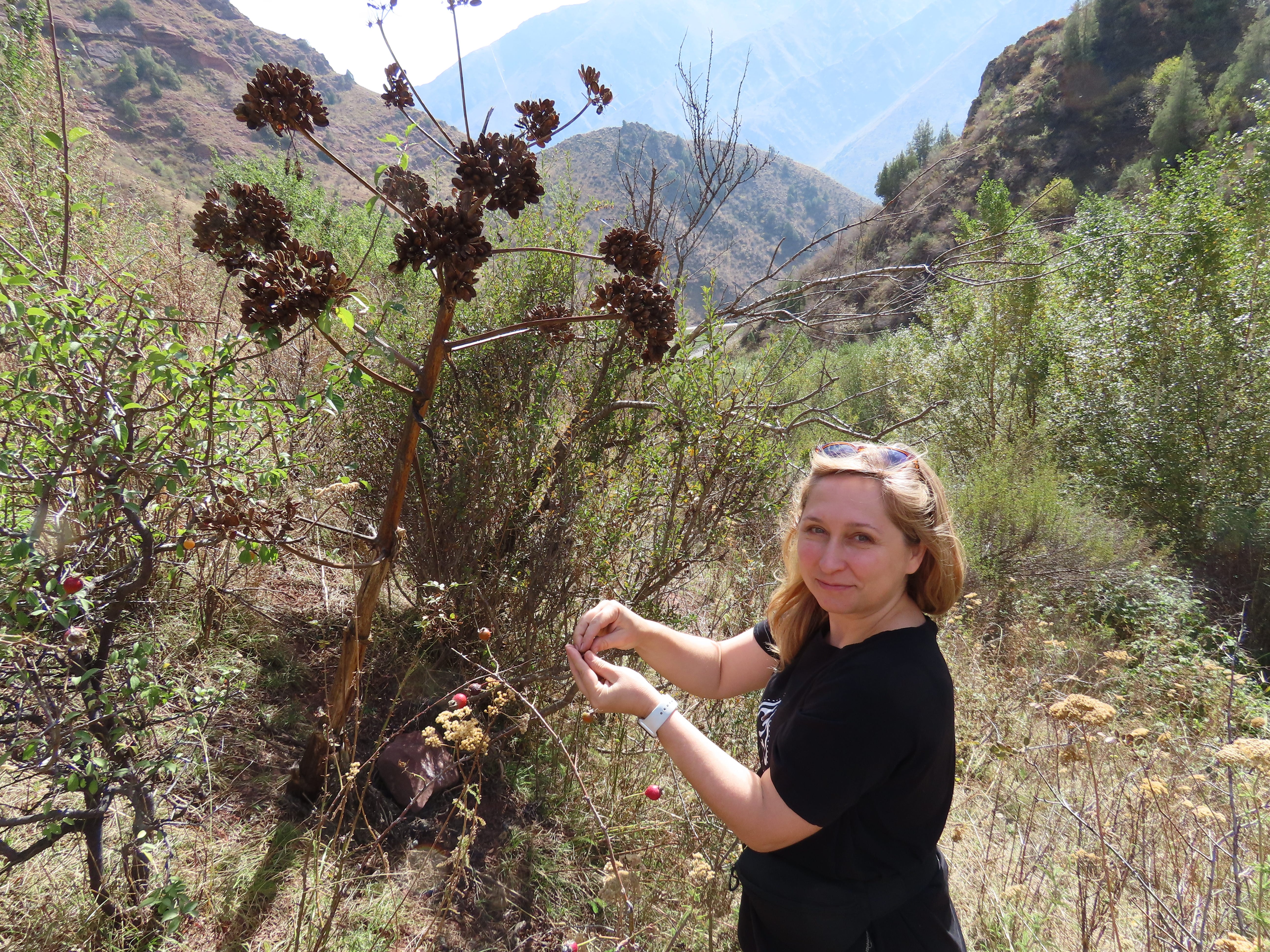
Anna collecting seeds
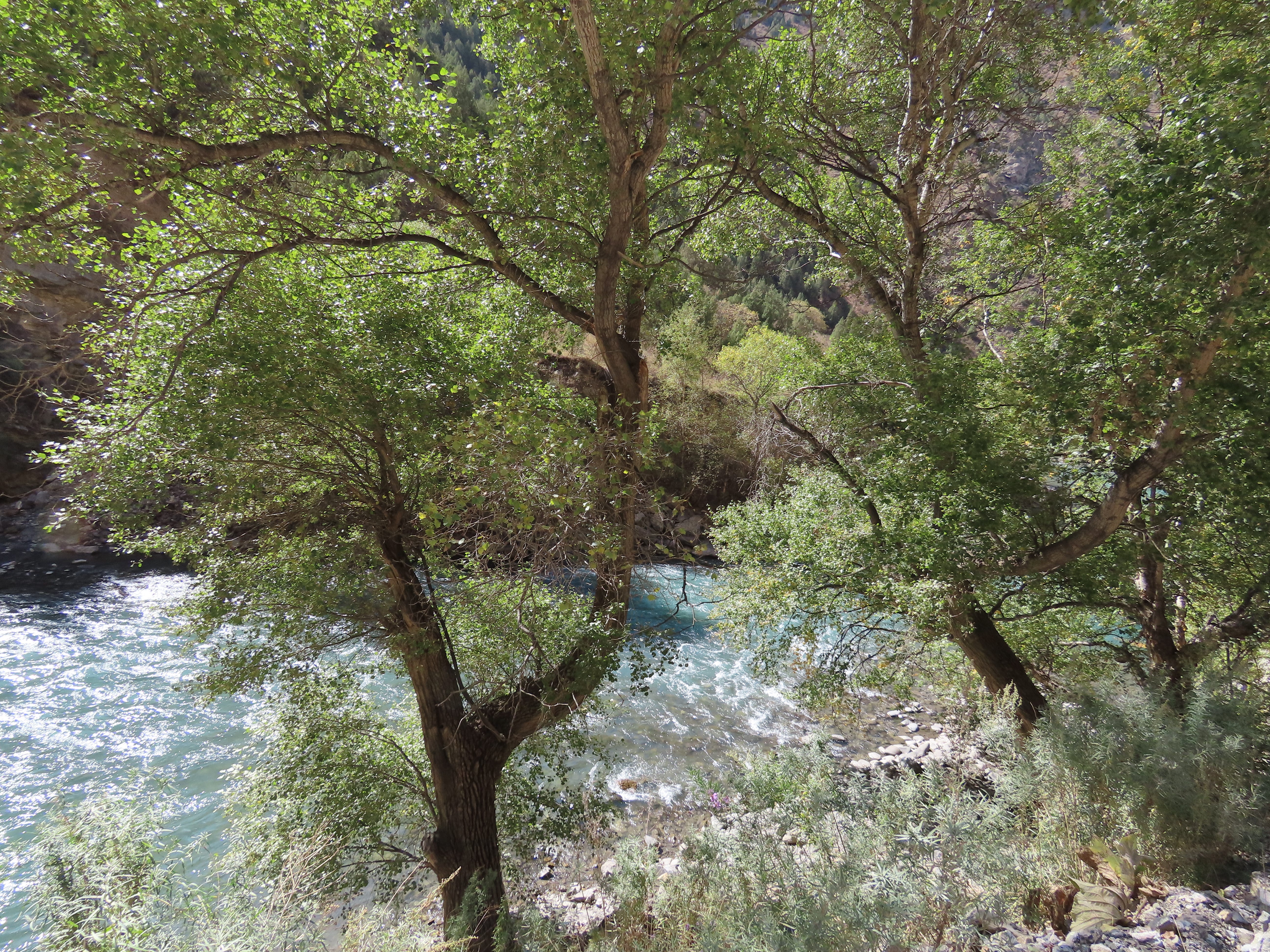
We saw several very old Tien Shan birches and some really big poplars. Big trees are generally a rarity here.
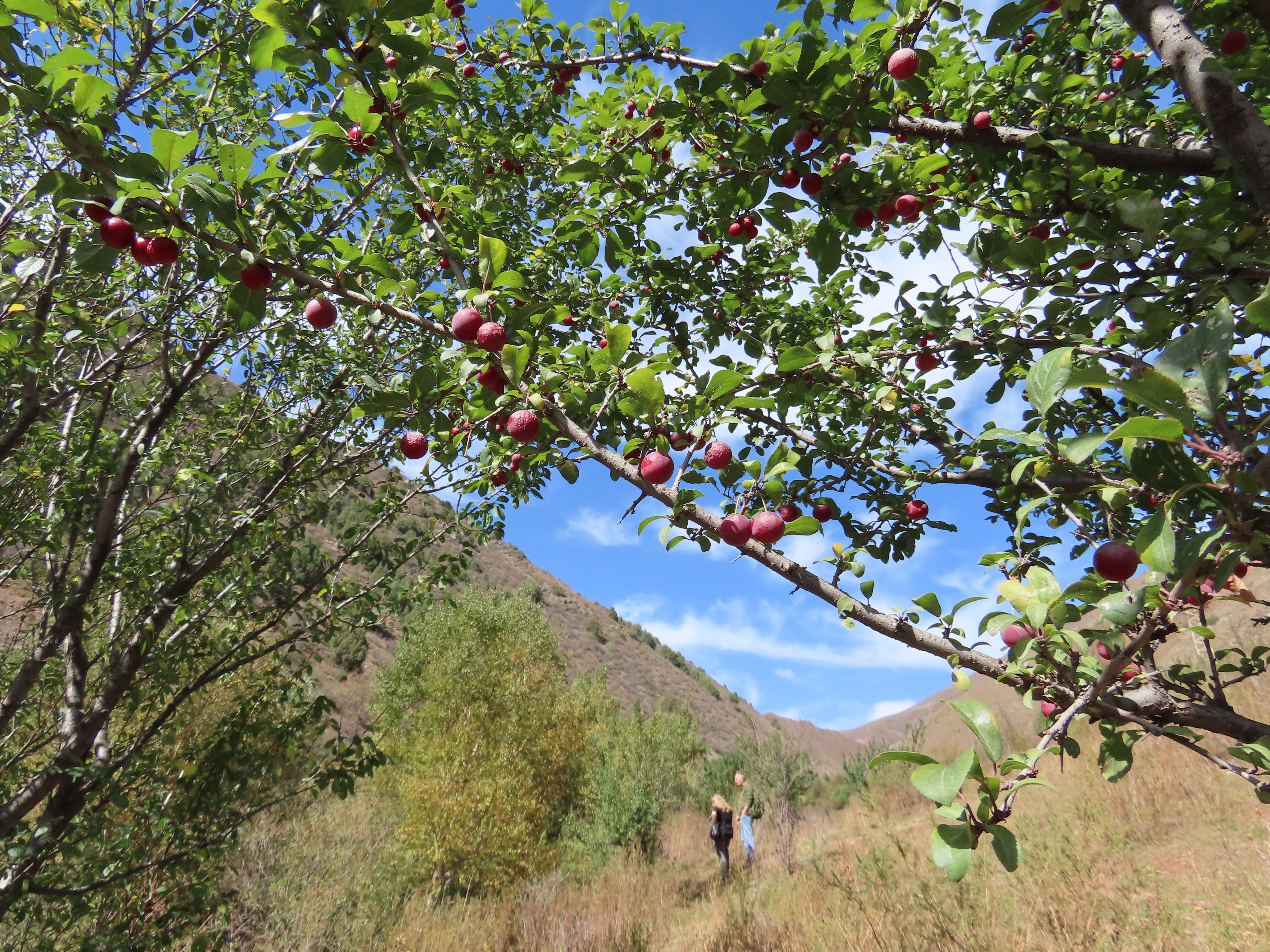
We also found a tree that the whole team decided was definitely the Red Book Knorring’s hawthorn.
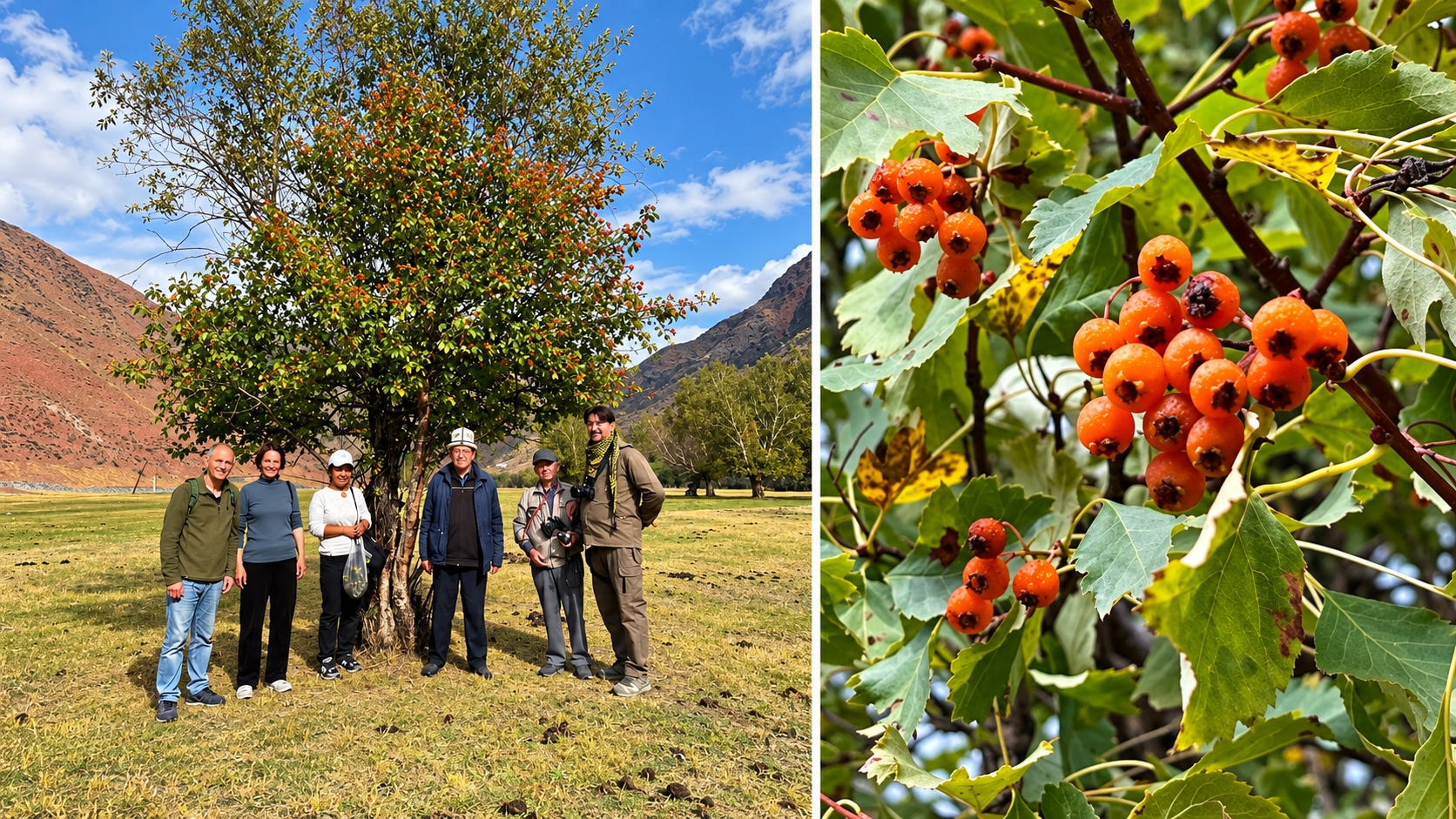
Some doubts remain, however: a competing identification is Korolkov’s hawthorn. Still, everyone is hopeful that the final inspection by specialists from the Academy of Sciences will confirm our first identification and thus provide support for another conservation effort.
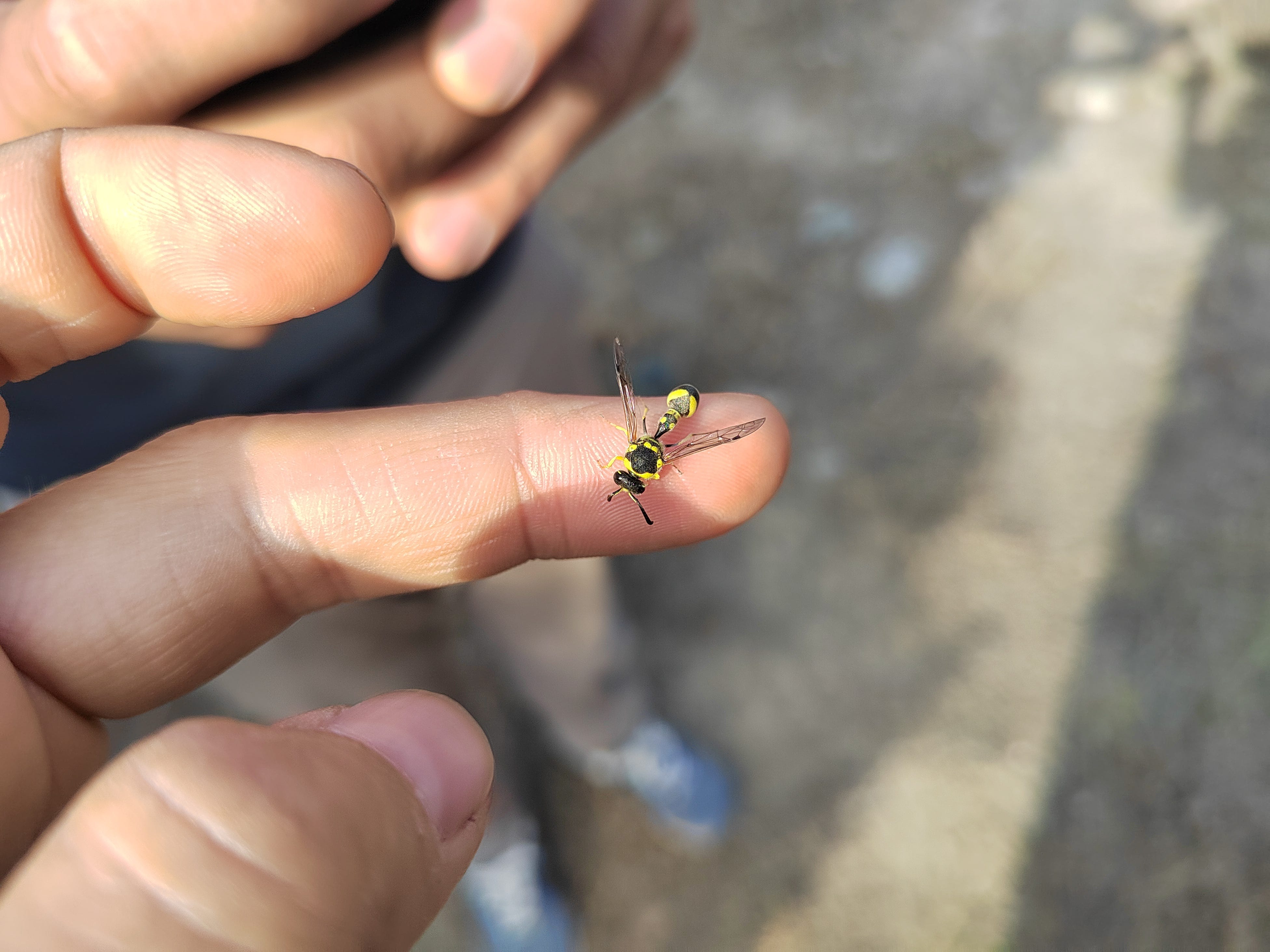
A fly, not a wasp
Biotic Regulation Principles for Nature Preservation
During this eclectic, highly emotional and picturesque trip, we were discussing biotic regulation science and the logic it provides to conservation efforts. I will briefly summarize it here.
The logic is as follows.
The task of keeping a favorable environment stable is extremely complex. “Complex” here means, at the very least, that this task cannot be achieved by technological means. I have discussed this elsewhere, and there are two reasons for this. First, the information fluxes processed by the biosphere to stabilize the environment are, and will always remain, beyond the capacity of our civilization. Second, even if we could handle the necessary information flow, we do not have the knowledge of what to do with it.
It follows that if natural ecosystems possess the complexity needed to stabilize the environment, then any human modification of them leads to a reduction in their regulatory potential. Therefore, conservation priority should be given to the least disturbed ecosystems. There is little point in preserving something less efficient while allowing these regulatory gems to continue disappearing.
Furthermore, after a disturbance, an ecosystem initiates a process of ecological succession, during which both the ecological community and its environment recover through a non-random sequence of species that appear and disappear one after another. Every stage of succession has its meaning in this recovery process. Species numbers may change non-linearly along the way.
If we choose to preserve particular stages of ecological succession according to species counts, for example by maximizing biodiversity at a particular stage, we interfere with this recovery process. From the biotic regulation perspective, this weakens regulation and can ultimately lead to ecosystem disintegration. We cannot stabilize a particular stage of ecological succession any more than we can stabilize a particular stage of a patient’s recovery from illness. The process should proceed unimpeded until the state of maximum recovery is reached.
This translates directly into the question of how much preserved nature should be maintained in early-, mid- and late-successional stages. These proportions cannot be determined arbitrarily according to which species we like or dislike, by species counts, or by other formal parameters. What must be taken into account is, again, ecosystem functionality: its ability to regulate the environment and maintain its own homeostasis.
A practical solution follows naturally. If we choose the least disturbed ecosystems as conservation cores, we can surround them with buffer areas in which more disturbed ecosystems are allowed to proceed toward recovery through ecological succession.
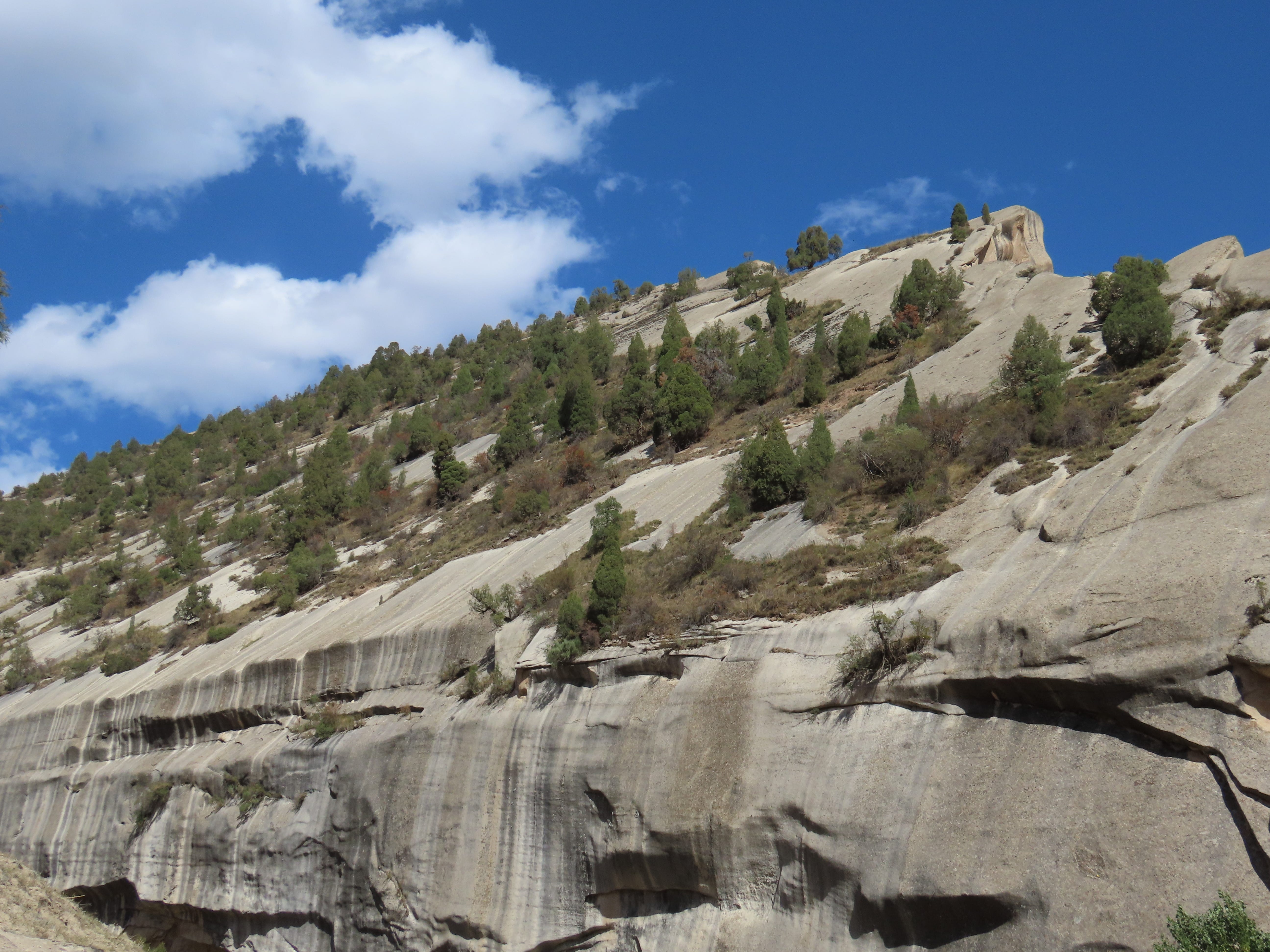
One of the most interesting findings during the trip: forest succession on a steep rock at about 2.5 km above sea level. Imagine that the green vegetation is removed and we are looking only at the bare white rock. It would be easy to say that the slope is so steep that a forest could not grow here. Yet, as we can see, it can, provided there is no grazing, which is impossible here precisely because the slope is so steep.
Now compare this to the image below, where on a slope devastated by grazing, only a few small trees, without associated lower plants, managed to survive. Here, no ecological succession is unfolding.
Our trip culminated at the ancient cave I mentioned earlier, where dripping water created a special atmosphere of connectedness through time. We could imagine our ancestors looking out from the cave and seeing green mountains lavishly covered with trees, rather than the bare slopes of today.
How many drips will it take for the mountains to become green again? Will there be somebody to look out from the cave and see them? Will they remember our feeble efforts today to go against the tide of destruction?
Who knows.
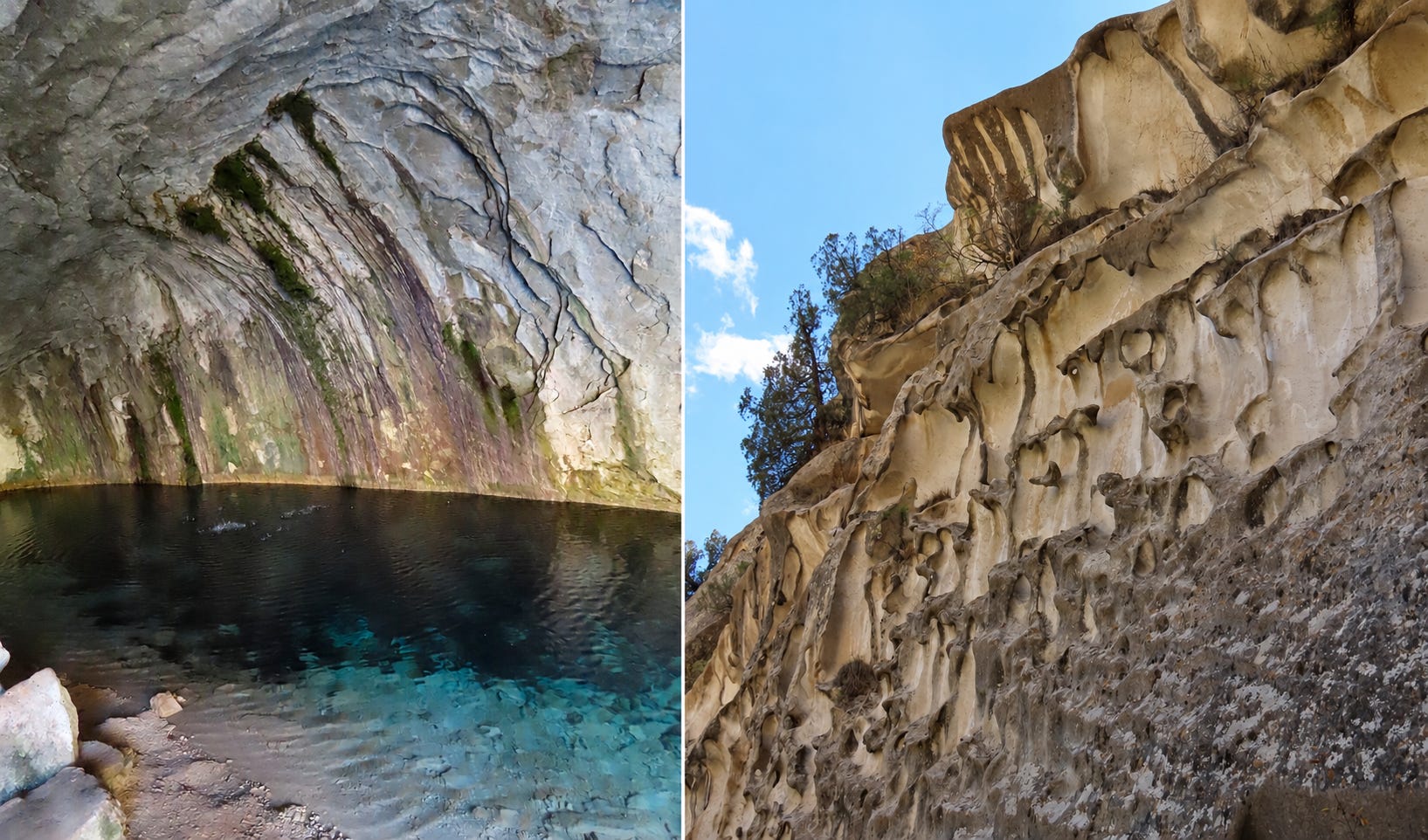
The cave and the rock above it
Related reading:
Information processing by natural ecosystems

Our attention is increasingly focused on the importance of computation. We are told that the one who computes more wins. To compute is to have an algorithm to which you feed some initial numbers, and which, after some operations, gives you another set of numbers that suit your goals. Often we find that this is about war: you feed the coordinates of enem…
Three comments: Firstly, we cannot rewild the whole planet. Environmentalists in the UK (which I follow more closely than the rest of Europe) get very excited about former cropland that has been rewilded and "returned to nature". That can only happen because the UK is able to import food from somewhere else in the world. So I believe we should focus on preserving what is left and have a global moratorium on any development of any remaining wild places. Secondly, from my understanding of your Biotic Pump theory, a whole lot of little micro-reserves won't achieve the desired effect on the global weather systems. One of my favourite books on conservation is David Quammen's "The song of the Dodo" in which he argues that very small reserves are terribly vulnerable to events that could render everything in them locally extinct. So, thirdly, I see our challenge as making the current stock of agricultural land (arable and grazing) more productive and more environmentally friendly. 20 mature rain trees per hectare of crop land won't function in exactly the same way as an intact forest, but it will be a great deal better than a mono-cropped field of corn. Similarly with grazing. You did not discuss how the grazing in Kyrgyzstan is managed or planned (if at all). Alan Savory has advocated a system of migratory grazing which allows the grasses and other plants in a pasture time to recover. A group of scientists in South Africa have taken this further and are advocating a system called FGSGR-PP. Briefly, the area is divided into 5 or 6 "paddocks"and only two of these are used for growing season grazing. It is hoped that all the species of grass get used equally (because of the grazing pressure) so that the less palatable species will not thrive because they are not grazed to the same pressure as the more palatable ones. Secondly, by giving the rest of the land a full rest, for about half the time, it will give the plants there time to set seed, and, just as importantly, set down root reserves. Such a system obviously requires the strict control of fire. In summary, I see our challenge (as humanity) to develop, on our existing agricultural land, systems which are productive enough to feed a growing human population for the next 50 years (after which it will start to come down) using systems that approximate as closely as possible to natural ecosystems. A system that has say 40% of the world's land mass protected in reserves, surrounded by agricultural deserts just won't save this planet. A system with 30% protected surrounded by agricultural systems that mimic nature as cleverly as human ingenuity can allow (while still feeding 9 billion people) stands a much better chance. So mono cropping huge fields is out, and companion cropping between alleys of trees, with controlled grazing livestock, is to be developed. Bruce Danckwerts, CHOMA, Zambia
If we build a bird house in a new tree where the old have been removed a bird may move back into the area? if we build a water house where water has been lost plants may move back into the area? You state that conservation must start with the preservation of an evolutionary construct beyond our ability to fully understand and you receive no arguments from me but I do believe there is much we can do to create a more favorable environment for this stored data base to utilize. Many thanks.