

Yesterday I took my mobile phone, entered several digits, pressed the call button and heard the voice of Mr. Bruce Danckwerts from Zambia. He was more than eight thousand kilometers away from my dacha near St. Petersburg. We briefly discussed our shared strategy to save the planet, which is two-fold: strict moratorium on destroying the remaining wilderness while working passionately and intelligently with already cultivated land to improve its productivity to support people living today [thus reducing the pressure on the remaining wilderness]. Mr. Danckwerts, suffering from seasonal heat in his home, and I, in the chilly darkness of a North European autumn evening, also agreed that there are grounds for measured optimism. The Internet still makes it possible for like-minded people to connect and support each other [without having to deal with local psychopaths, I would add]. Supporting each other works wonders, so if we simply fail to save the planet, as Mr. Danckwerts rightfully noted, it will be mostly due to our lack of intelligent effort rather than opportunity. To this end, I am happy today to offer my substack for publishing Mr. Danckwerts’ new Project, which aims to stimulate local people in Southern Africa to compete in the noble activity of restoring their land. I see here a reminiscence of my own dream of a competition among countries to champion ecological maturity. Let it be, please read and spread widely and help if you can. — Anastassia Makarieva
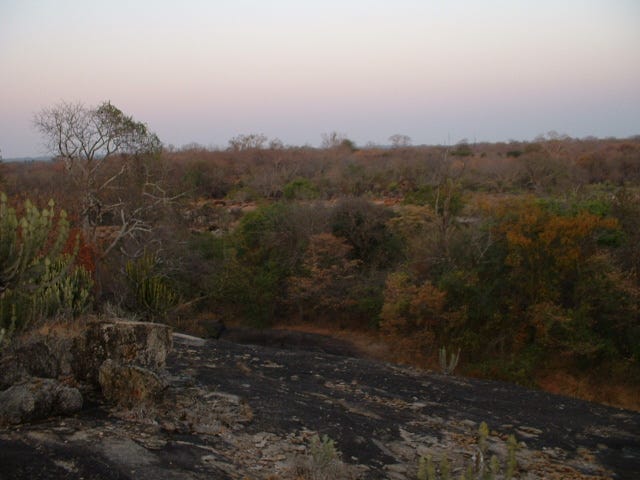
Deciduous woodland in Kafue National Park during the dry season. According to Bruce, this is one of the places where people can recharge their batteries in just a few days, ready to tackle all the world’s problems. The other two are Nyanga in Zimbabwe and Mutinondo Wilderness in Zambia (the latter is shown at the end of this post). All photos provided by Bruce Danckwerts.
1. Executive Summary
This paper describes a project to inspire rural communities to restore their natural resources (particularly Trees, Soils and Water) by means of a significant prize (perhaps as big as $200m) to the most improved community after 20 years. Interest in the project is to be sustained by means of an annual prize (perhaps of at least $50,000) for the best Facebook page that describes what a community has achieved, and how they have achieved that. This paper explains why such a project is necessary and how it is envisioned to initiate it and to sustain it.
2. Vision
The flow of the Zambezi is approximately half of what it was when it peaked in the 1970s. The trend is still downwards and there is no obvious link to other phenomena (like El Nino/La Nina, Sunspot activity, or even Climate Change). Because no similar trend has been observed in other rivers, it is fairly safe to assume that the decline has been due to some local effect. The most obvious local effect is the weakening of the Terrestrial Water Cycle, due (at least) to the Deforestation in the area, the Degradation of the soils and the Depletion of the Water Table.
Our Vision is to reverse this decline by restoring these natural resources in the whole sub-continent of Southern Africa. To do this, it is proposed to launch a prize to the community in Southern Africa (generally a chieftainship) that not only restores these resources, but shares their knowledge and experiences, so that other communities might also succeed.
3. Founding Principles
1. Evidence before ideology.
Decisions should be guided by measurable ecological outcomes rather than adherence to any particular philosophy or technique.
2. Communities lead.
Lasting landscape restoration is achieved by local communities, not imposed upon them.
3. Knowledge grows when it is shared.
The most valuable outcome of the Challenge is the practical knowledge generated by participating communities and made freely available to others.
4. Transparency builds trust.
Governance, finances and judging processes should be open to public scrutiny.
5. Technology serves people.
Artificial intelligence, satellite data and digital platforms are tools that assist communities and improve fairness; they do not replace human judgement or local knowledge.
6. Collaboration multiplies success.
Competition encourages innovation, but collaboration ensures that successful innovations benefit everyone.
7. Think in generations.
Ecological restoration requires patience. Decisions should favour long-term resilience over short-term gains.
The above principles should guide this project whenever decisions need to be made.
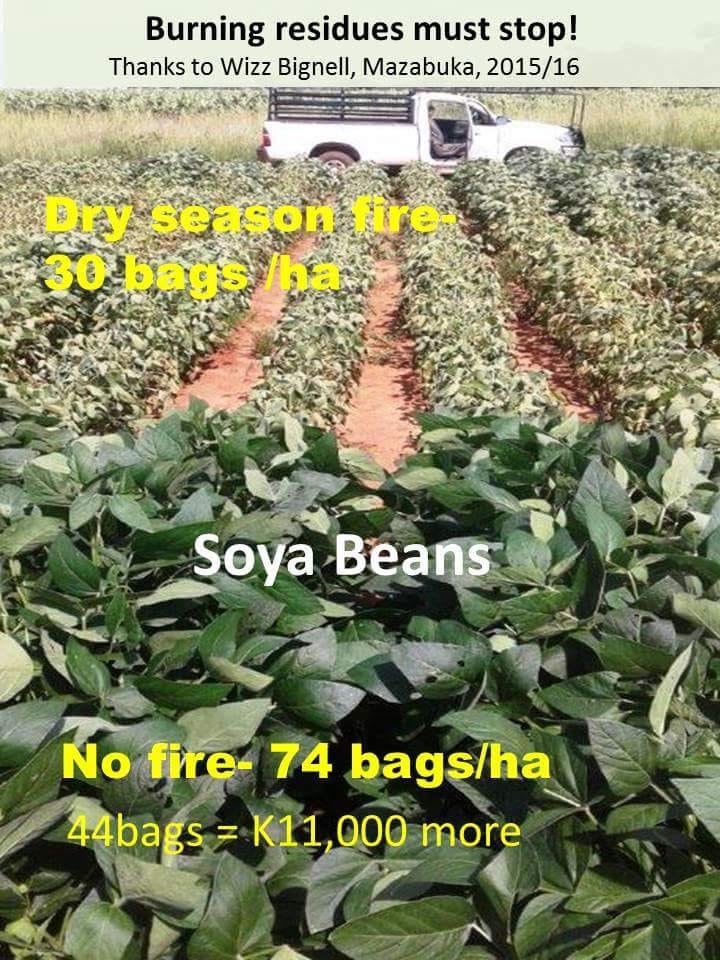
Just before the 2015/16 season (which proved to be a drought) a friend of Bruce had a fire burn the edge of a field. He planted the whole field anyway, and the burnt strip yielded much less than the unburnt strip. (He is a zero-till/cover crop farmer, so the soil had much more ability to receive and then hold the water.)
4. The Knowledge Principle
Knowledge is a unique resource:
(a) It does not matter how many times it is shared; its value remains intact and undiminished
(b) It is a resource that improves with time, as humanity continues to add to and improve that knowledge
(c) It is a resource that can be used again and again, down the years, and indeed down the generations, and across landscapes.
(d) Unusually (and not trivially) it is a resource that, once acquired, cannot be stolen.
However, Knowledge has no value, unless it is understood and adopted by the recipient:
“If you cannot learn the way we teach, then we must learn how to teach you”
So this project plans to use all the tools of modern technology including AI and satellite sensing technology, and the offer of a significant prize, to encourage communities in the Southern half of Africa (South of the Equator) to work together, to find ways to improve their resources of Trees, Soils and Water and then to share their experience (through their Facebook page) so that other communities can also try, and hopefully improve on, the methods that have been shown to be effective.
5. Why this Challenge is Needed
A Campaign to Bring back the Rains (to Southern Africa) was launched in October of 2024 but progress has been negligible. The campaign identified Trees, Soils and Groundwater as being the essential foundation on which the Terrestrial Water Cycle depends, and, by restoring this foundation it was hoped to reverse the trend, which is essential to the long-term well being of the people of Southern Africa.
There are three factors working against our future:
(a) The growth in Human Population growth is such that 200m more humans could be added to the population of Africa, south of the Equator in just 16 years’ time.
(b) Climate Change is working against us – a hotter climate makes it more difficult to restore vegetation and a drier climate will tend to force us to over-exploit our groundwater.
(c) Deforestation and badly managed Agriculture are reducing our natural resources. We have to not only stop this degradation, but reverse it.
The longer we leave any meaningful efforts to reverse this degradation, the harder it will be to achieve the necessary improvement.
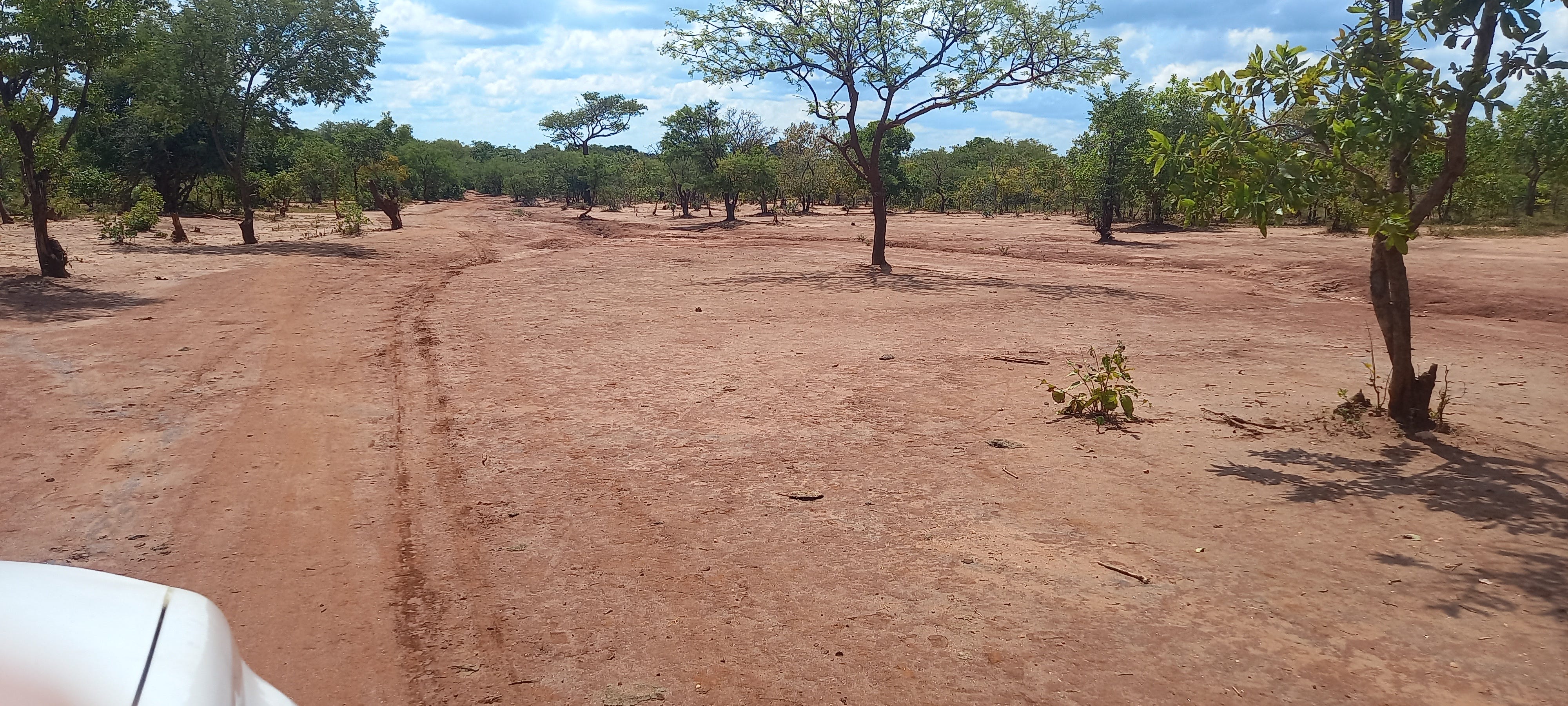
Overgrazing on communally owned land. The photo was taken in early April (so right at the end of the rainy season, when grass should have been at its maximum). It is what we are coming to term a treed desert. By allowing the cattle to concentrate around a single water source, the ground is bare. Any biology left in that soil will be killed by the high temperature of direct sunlight (40 deg C days are fairly common), and, when the rain comes, it will wash that unanchored soil away.
6. Why Now?
Apart from the old adage that “there is no time like the present” this whole project becomes very much easier to implement with the arrival of several technologies that can help the better implementation of any ideas. The first, obviously, is the Internet, which allows ideas to be shared instantly, and almost effortlessly. More specifically it is the development of smart phones and networks (including Starlink technologies) that allow those smart phones to access the Internet, even in remote communities. The second is the development of AI, which allows people to access human knowledge far more quickly than would otherwise have been the case. AI will also allow the quick and more accurate analysis of Satellite data, which is the third technology. Even now, remote sensing satellites allow us to monitor many of the parameters needed for this project. During the lifetime of the competition, the range and accuracy of these remote sensing satellites is likely to improve significantly.
7. Scientific Foundation
The whole project will always be guided by the best available Science. It will never be guided by any virtue-signaling fashions, but only by principles that have a firm foundation in the best Environmental Science of the day. Although it is recognized that this Science will improve during the 20 years of the initial competition, it is unlikely that this Science will ever reverse the initial aims – to Restore Trees, Repair Soil and Raise the Water Table. Future scientific progress might refine the priorities in certain situations, and uncover other aspects for incorporation into the project, but it is very unlikely to require the reversal of any work done by a community in the earlier stages of the project.
8. The Challenge
Given what has been discussed so far, the challenge is to set up a competition between communities (almost certainly Chiefdoms) to see which community can share the best ideas for improving the natural resources of their area, especially (but not exclusively) their Trees, Soils and Groundwater. (The focus on these three resources is because they are the three pillars of the Terrestrial Water Cycle and are all essential to ensuring adequate rainfall in the interior of the sub-continent.) In order to measure any response to these resources, the competition will have to be long term – initially for a period of at least 20 years.
To maintain interest in the competition for such a long period, it is also proposed to have an annual prize for the best Facebook page for each community. These Facebook pages will largely be curated by the younger members of the community. For two reasons: Firstly, the are more likely to be familiar with the technology than their elders and secondly, because it is their future, more than anyone else’s, that will be affected by the next twenty years.
In order to help with the registration of each community and then the judging of the annual and long-term competitions, it is felt that it will be necessary to develop a phone App, that allows communities to register, not only their location, but also their Facebook page. It will then be necessary to develop tools, including AI interpretation of Satellite Data in order to be able to assess the impact of the ideas proposed by the different communities.
Of course, it will also be necessary to raise the funds, not only for the prizes, but also to pay the staff for administering this project.
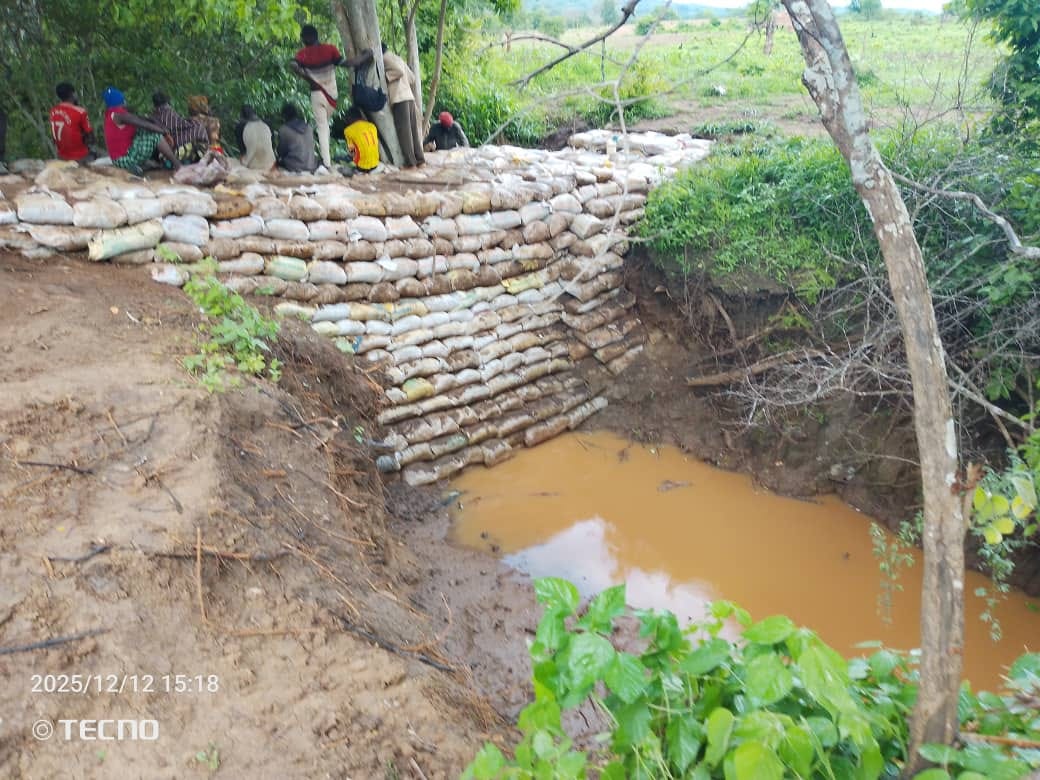
This is a photo from a community that is very proud of teh "check dam" that they built in their community. Bruce argues that a check dam is too late - the soil has already been washed off their overgrazed, burnt landscapes. The capacity of the check-dam will soon be filled with silt, and the water will flow straight over the top. Water MUST be caught where it lands, by means of potholes/tied ridges/ basins in the crop fields and half moon swales in the pasture areas.
9. Governance
It is proposed to have a small board, initially made up of volunteers, with a minimum of a representative from:
(a) the Chiefs in Southern Africa
(b) the Climate Science Community
(c) the Soil Science Community
(d) the Hydrology Science Community
(e) the IT/AI Industries
(f) the Legal Profession
(g) the Fundraising Community
(h) and perhaps a staff member of the project, as well as the Project Manager.
This board would then recruit and appoint a Project Manager, who would be responsible for all aspects of the project. This manager would obviously have the freedom to recruit any other staff that might be needed, within the constraints of the finance that the project is able to generate. It is proposed that each board member should be elected for no more than two 5-year terms, and that the chairman of the board, be elected from those board members who have served at least one full term. To allow for better continuity, election of board members should be staggered, with only one board member being elected at a time.
(As envisioned, many of the board members might not necessarily be resident in Southern Africa nor be active donors to the funding of the project. They would be persons who, within their fields, are recognized as having the best knowledge appropriate to the project, and the resources (especially of time) to dedicate to the project.)
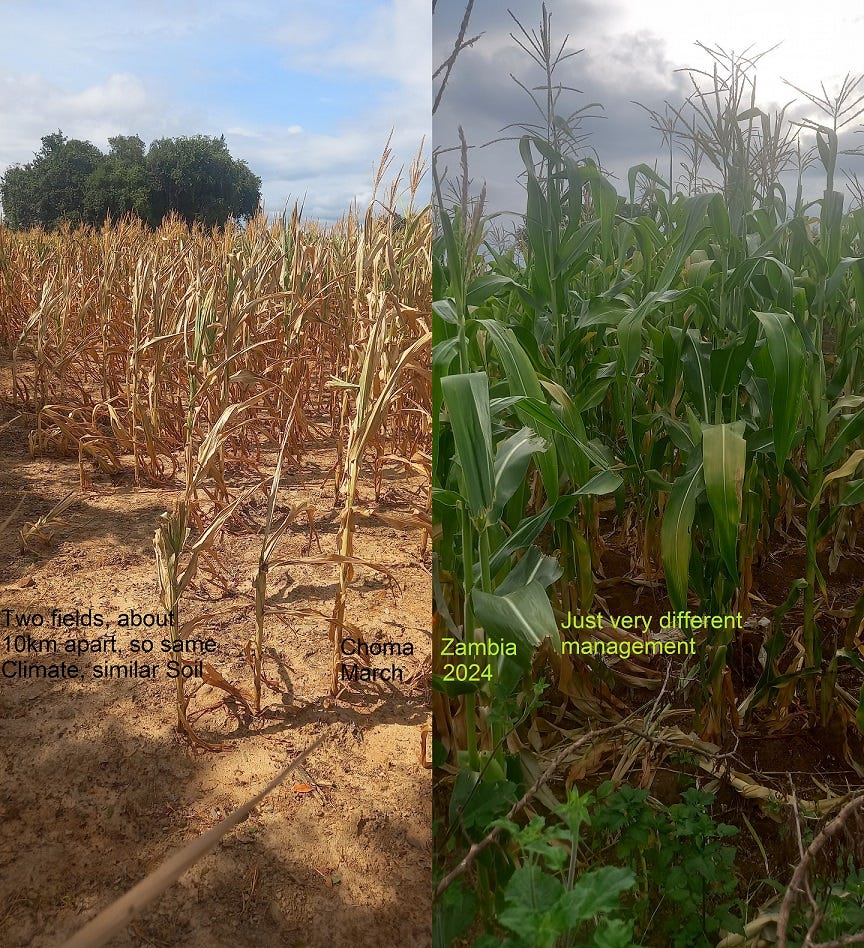
Drought 2024. These two photos, side by side, were taken the same day, about 7 km apart. The droughted one had cost the farmer a lot as he used lots of diesel, fertiliser and pesticides. But he had trashed his soil and yielded virtually nothing. The other had used a lot of compost, and, although his yield was well down on normal, he did have something to harvest.
10. Transparency
To some extent, this has already been covered in the section on Founding Values (4). Because this whole project is going to depend entirely on donated funds, it is believed that, at very least, the project owes it to those donors (be they large or small) to be absolutely transparent as to how those funds are being spent.
Equally, for the communities competing in the project, it must be absolutely transparent as to how the winners are chosen and every community should probably get an annual report card listing their strengths and weaknesses. This annual report should help to remind communities that the competition is not only about which community achieves the greatest improvement in their natural resources, but which community shares their METHOD of achieving those goals – methods which can be used and adopted by other communities.
11. Risks and Mitigation
This section is a starting point, and will be expanded as the project develops. Its presence signals to funders that risks have been thought through rather than ignored.
Funding shortfall in the early years. Mitigated by keeping the interim structure lean and volunteer-led until core funding is secured. Probably also delay the launching of the competition until at least several years of funding has been secured for the Facebook page competiton.
Difficulty verifying community-reported progress. Mitigated by combining satellite/AI monitoring with community self-reporting, rather than relying on either alone.
Loss of momentum over a 20-year horizon. Mitigated by the annual Facebook-page prize and yearly report cards, which give communities and donors a reason to stay engaged well before the main prize is due.
Succession risk at board and founder level. Mitigated by staggered, fixed-term board elections and an explicit plan for the founder to hand over the chairmanship.
Failure to deliver measurable or sufficient results. This might prove to be the biggest risk and can be avoided by writing into the original rules, that, should no community manage to achieve significant, measurable, results within the 20-year time-frame, then the competition will be rolled over for a further period until a clear and significant winner can be identified.
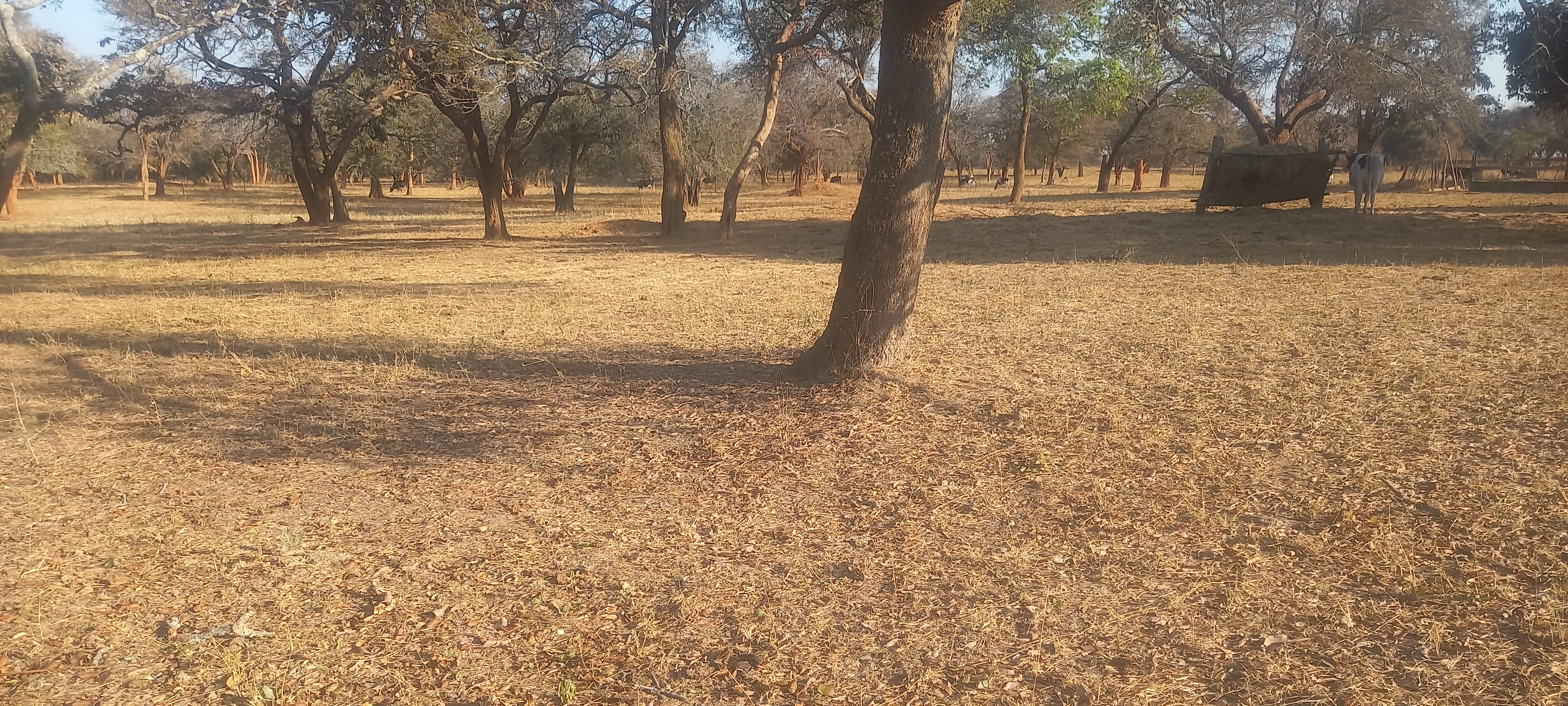
This photo shows how one could manage some of ALREADY cleared woodland to yeild productive pastures (or even cropland) while still maintaining about 20 effective "rain" trees per hectare (65% tree cover).
12. Roadmap
It is proposed to set up an Interim Board, set up by volunteers known to the author of this document. This Interim Board, perhaps instigated as early as January of 2027, would be tasked with recruiting a project manager, and the project manager would be tasked with raising funds as quickly as possible, not only to pay their own salary, but also to develop the technologies (phone App) needed to get the competition started. The project manager may also have to recruit other staff (or volunteers), especially to develop the technologies required and to raise the funding.
It is assumed that the original board members will only step down once they have been able to find and elect a suitable replacement. Or, the original board member might agree to continue serving the board, for the maximum of two 5-year terms. However, as soon as possible such a board member should change from being a purely voluntary member, to a member remunerated by the project for their services. (Given the Core Value of Transparency, all remuneration to board members, and the project’s staff, should be declared on a suitable website.)
The author of this paper, the founder (if you like) could be the initial Board Chairman, but I would prefer to step down as soon as possible, partly because I do not really have the experience and neither is age on my side.
13. Invitation to Collaborate
This Founding Charter has been sent to you in the hope that you will be willing to participate, either by volunteering to serve on the founding board, or as a more permanent board member, or as a donor, or (equally important) as a mentor of a community Should you not be willing to participate (especially in the very early stages of this project) perhaps you know of a colleague who might be interested. Again, in the interest of Transparency this document may be freely circulated to anyone who may be willing to help.
Bruce Danckwerts, CHOMA, Zambia +260977 406078 Peaceydanckwerts@gmail.com
John Pollock (co-founder of the idea) basicfolder@gmail.com
14. Appendices
(a) The initial campaign to Bring back the Rains.
(b) The idea behind this project.
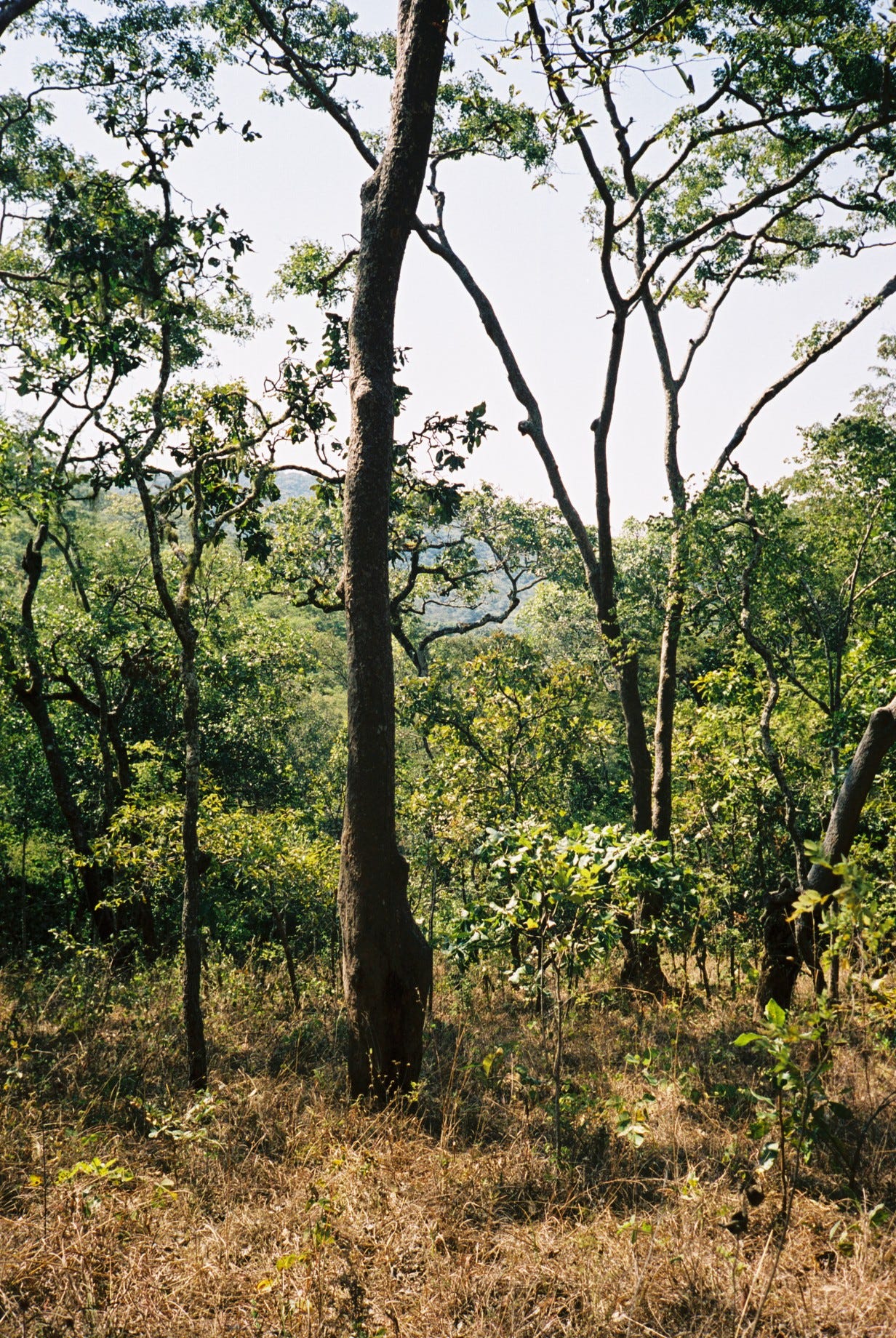
Miombo woodland in the Mutinondo Wilderness

How to save the planet: https://www.bip-it.com/project/625-cloud-power-water-airhes
Thank You Bruce and Anastassia. I will include this story in my next blog post with a link.